Who Creyos is best for
Creyos (Cambridge Brain Sciences until 2022) turns cognitive tests based on Adrian Owen's University of Cambridge research into short online tasks. Patients complete them on a computer or tablet, in clinic or remotely, and the clinician gets a scored report comparing results with people of the same demographic.
Best for
- Primary care and geriatric practices that run cognitive screening during Medicare Annual Wellness Visits
- Neurology, concussion and brain injury clinics that want repeatable cognitive measures over time
- Psychiatry and mental health practices assessing ADHD, depression, anxiety or substance use
Not ideal for
- Practices looking for a telehealth video platform or full EHR
- Clinicians who need a full neuropsychological evaluation by a psychologist
- Buyers who want transparent list pricing before talking to sales
Creyos pros and cons
Pros
- Short testing: the vendor says the two-task screener takes under 3 minutes and follow-up testing takes under 20 minutes
- Automatic scoring, with results the vendor says are available within minutes
- Normative comparisons drawn from what the vendor says are more than 85,000 participants
- Cognitive tasks plus validated questionnaires such as PHQ-9, GAD-7 and ASRS
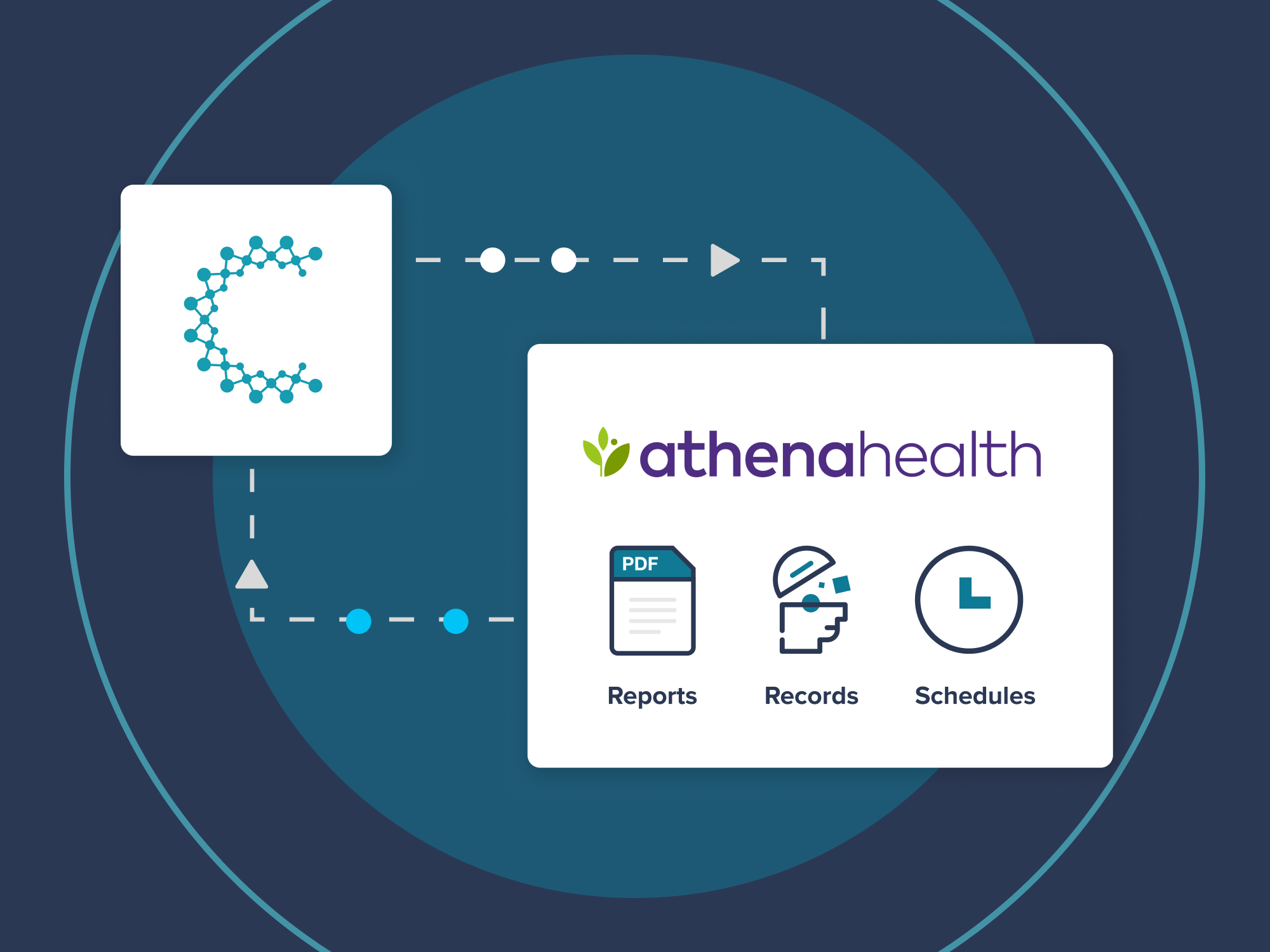
- EHR integrations with Epic, eClinicalWorks, athenahealth and AdvancedMD, plus others through Redox
- States HIPAA compliance and SOC 2 Type II compliance
Cons
- No published pricing; third-party listings only estimate a starting price
- EHR integration setup depends on the EHR and is arranged through Creyos
- Patients need a computer or tablet with an internet connection
Creyos pricing
Creyos does not publish prices; its site directs practices to request a demo. Third-party directories GetApp and Capterra list an estimated starting price of about $250 per month and note a free trial, but trial length and plan details are not public. Creyos says assessments can be billed under common CPT codes for neuropsychological, psychological and cognitive services; confirm coding with your biller.
Key features
- Online cognitive tasks covering short-term memory, reasoning, concentration and verbal ability (for example Spatial Span, Odd One Out, Double Trouble and Digit Span)
- Behavioral health questionnaires including PHQ-9, GAD-7, MDQ, PCL-5, ASRS, AUDIT and DAST-10
- Condition-focused protocols, including ADHD Assessment and Dementia Screening and Assessment
- Annual Wellness Visit support: the vendor says assessments meet Medicare's cognitive evaluation requirement for the AWV
- Remote or in-clinic administration and graphical reports that track change over time
HIPAA, security and integrations
Creyos states that it maintains HIPAA compliance and is SOC 2 Type II compliant, and that these safeguards extend to its EHR integrations. It does not publish hosting details or a sample BAA, so request one during contracting.
For EHRs, Creyos names Epic, eClinicalWorks, athenahealth and AdvancedMD, among others. Depending on the EHR it uses a custom-built connection or the interoperability company Redox, which exchanges data over HL7 and FHIR. Completed reports sync to a designated place in the patient's chart with patient matching.
Creyos alternatives
- Phreesia — patient intake and digital forms across the visit, broader than assessments but without Creyos's cognitive tasks.
- Valant — a behavioral health EHR and practice management system for psychiatry and therapy practices that want records and billing in one place.
- ICANotes — a behavioral health EHR with menu-driven notes and treatment plans for psychiatric prescribers and therapists.
- SimplePractice — an all-in-one EHR and practice management platform for solo and small therapy practices.
- Doxy.me — browser-based telehealth video that can host the remote visit while Creyos handles the testing.