Who PracticeSuite is best for
PracticeSuite sells modular cloud software for scheduling, billing, an ONC-certified EHR and patient engagement. It targets independent and multi-location practices and billing companies, and also sells outsourced RCM and credentialing.
Best for
- Medical billing companies managing claims for several client practices
- Independent and multi-location practices that want PM, billing and EHR from one vendor
- Groups considering outsourced billing alongside the software
Not ideal for
- Practices that want published, self-serve pricing before a sales call
- Large health systems that need enterprise-grade inpatient workflows
PracticeSuite pros and cons
Pros
- One cloud platform covers scheduling, billing, RCM, EHR, patient portal and telehealth
- The EHR (PracticeSuite EHR 25.0.0) holds ONC certification for ambulatory care, with e-prescribing included in paid EHR subscriptions
- The vendor states it is SOC 2 certified and signs a BAA with every client
- Built for billing companies as well as practices, with robotic process automation for claims
- AI tools include an ambient Scribe and RingAI, which opens the caller's record when the phone rings
Cons
- No prices on the vendor's pricing page; every customer gets a custom quote
- Some components, including the HelloHealth portal and Direct messaging, carry separate setup and monthly fees
- Hosting and encryption details are not published
- RingAI's AI call-reason prediction is still listed as coming soon
PracticeSuite pricing
As of October 2026, PracticeSuite does not publish prices. Its pricing page says it builds a custom package after a discovery call, and customers pay only for the modules they choose. The subscription includes updates and support with unlimited administrative users, and per-provider and per-transaction pricing is offered to smaller practices with low billing volume. Setup, training, migration and clearinghouse fees and contract terms are not listed. Its ONC disclosure says HelloHealth and EMRDirect Direct messaging each carry a one-time setup fee plus a monthly per-subscriber charge.
Key features
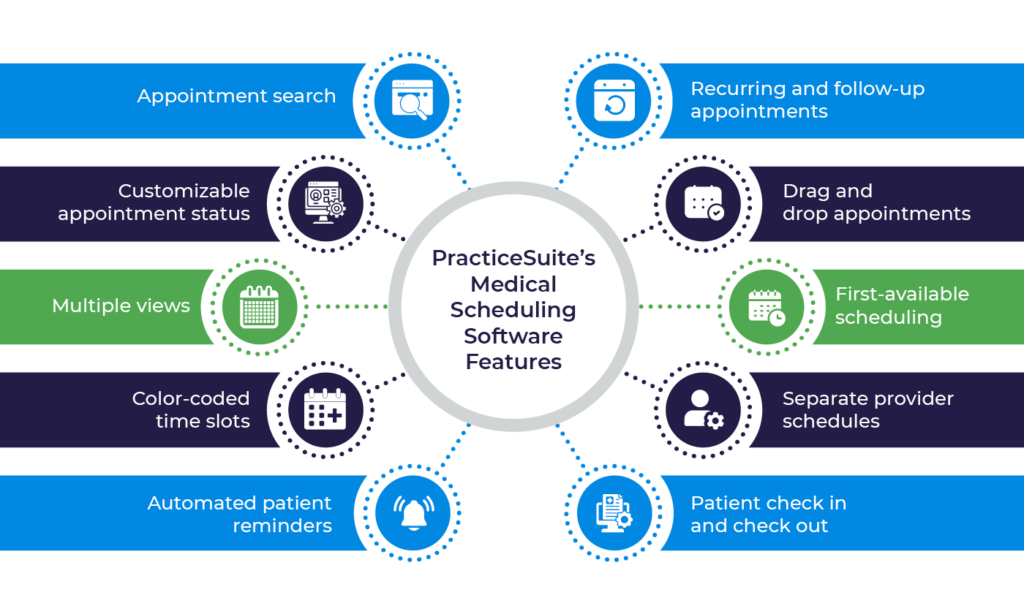
- Practice Management and Medical Billing / RCM Software: scheduling, registration, claims, real-time insurance verification, claim scrubbing and denial dashboards
- Robotic Process Automation (RPA): automates claims processing, submission and data entry
- EHR: customizable charting, electronic labs, e-prescribing and dashboards
- Scribe: ambient listening that drafts structured notes in the provider's style, in browsers and on iOS and Android
- RingAI Front Desk Call Manager: caller-ID screen pop with front office, clinical and billing context; an agent mode called S.A.R.A can book appointments when staff cannot answer
- Patient Engagement with HelloHealth: patient portal, online scheduling and digital check-in
- Telehealth, Electronic Patient Statement Services, Practice Marketing and Credentialing Services
HIPAA, security and integrations
PracticeSuite says the platform is HIPAA compliant and SOC 2 certified (since 2020, per its timeline) but does not say whether the report is Type 1 or Type 2. It signs a BAA with every client. Its EHR holds ONC certification dated May 29, 2026. Hosting and encryption details are not published. Its ONC disclosure lists NewCropRx, EMRDirect and HelloHealth as the additional software the certified EHR relies on. Its homepage shows partner logos including Practice Fusion, Elation, MicroMD, HelloHealth and RamSoft, but it does not publish a full integration list or describe how each connection works.
PracticeSuite alternatives
- CollaborateMD — cloud billing and practice management for billing services that do not need an EHR.
- Tebra — combined EHR, billing and patient marketing aimed at independent practices.
- Office Ally — low-cost practice management and clearinghouse for budget-focused offices.
- AdvancedMD — broader suite with deeper reporting and more published pricing detail.
- RXNT Scheduling — practice management and EHR bundles with onboarding and support included.