Dragon Medical One Alternatives: 6 Options We Actually Deploy in 2026
By Practice All Team ·
Dragon Medical One has earned its reputation: two decades of speech-engine refinement and a Best in KLAS streak to show for it. But the practices that call us about it are rarely asking whether it's good. They're asking why it costs so much, why it's tangled up with enterprise DAX Copilot contracts, and what else exists that their five-provider group can deploy this month.
As a managed medical IT firm supporting 2,000+ healthcare organizations, we deploy and support dictation tools daily — we don't sell any of them. This is the alternatives list we give our own clients. For the full head-to-head with scoring methodology, see our best medical dictation software ranking.
Why practices look beyond Dragon
Three reasons come up constantly:
- Price shape. Dragon Medical One plus the DAX ambient layer lands between $448 and $930+ per provider per month at enterprise terms. Small groups can't justify it.
- Deployment weight. Licensing, profile management, and Citrix/VDI configuration are built for health systems with IT departments.
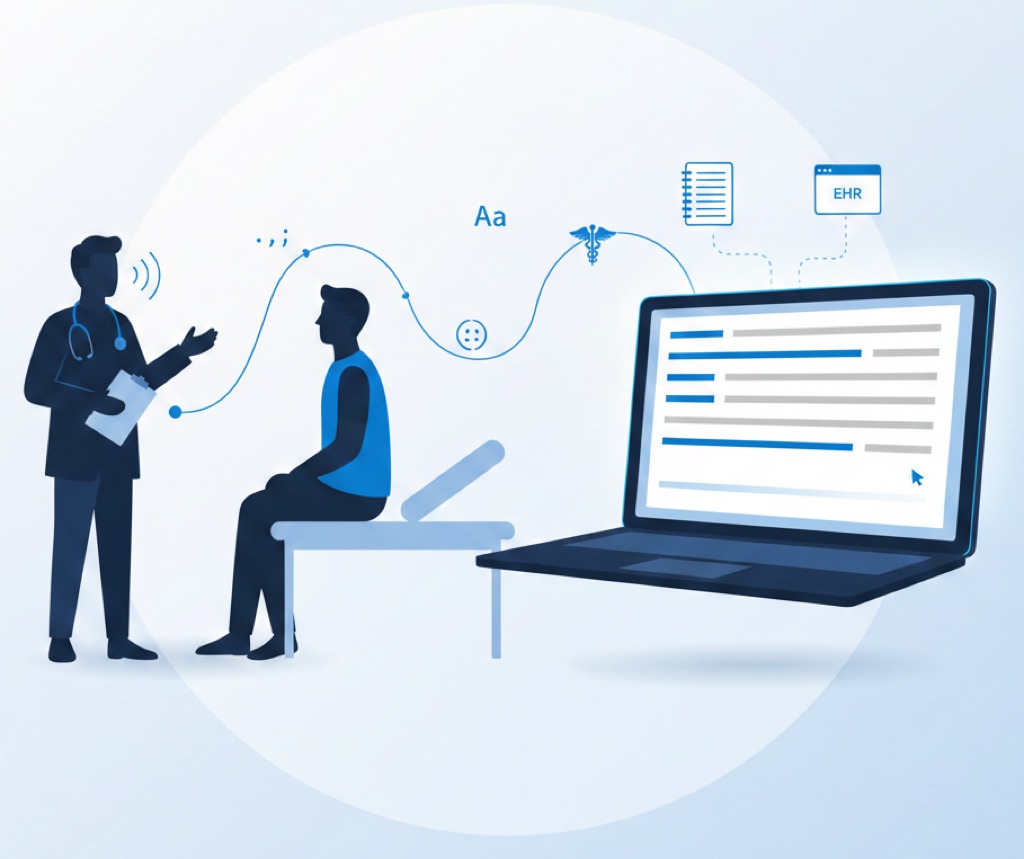
- The market moved. Ambient AI scribes now generate complete notes from the visit conversation — a different workflow than dictating punctuation-by-punctuation, and often a bigger time win.
The alternatives, from our deployments
VoiceboxMD — our most common recommendation for small and mid-size practices. Transparent self-serve pricing, strong specialty vocabulary out of the box, EHR write-back rather than copy-paste, and it behaves well in Citrix/VDI environments — the thing that disqualifies many newer tools for virtualized practices.
Suki — the closest philosophical successor to Dragon: voice commands, chart navigation, and ambient order staging with deep Epic/athenahealth/Oracle Health integrations. Powerful in structured environments; the learning curve and $299–$399/month pricing make it a better fit for groups with IT support.
Abridge — the enterprise ambient-AI leader, with impressive note quality from conversation audio. Institutional contracts only; if you're a hospital-affiliated group, it belongs on your shortlist.
Freed — the fastest path from sign-up to first note for a solo clinician. A true ambient scribe with consumer-grade onboarding. Verify EHR integration depth for your system before committing; some workflows are still copy-paste.
Augnito — strong pure speech recognition at aggressive pricing, popular with practices that want Dragon-style dictation without Dragon-style contracts.
Sunoh — worth a look specifically for eClinicalWorks practices, where its integration is tightest.
Compare all of these side-by-side in the medical dictation & transcription directory.
How to run the evaluation (two weeks, not two quarters)
- Pick your two heaviest documenters and one skeptic. If it works for them, it works.
- Test in your real environment — same EHR, same workstations, same VDI setup if you have one. Audio capture behaves differently in virtual desktops.
- Measure one number: recorded encounter to signed chart. Accuracy percentages are marketing; minutes-to-signed-note is money.
- Check the editing burden. Ambient AI notes are often verbose in the Assessment & Plan. If your physicians spend the saved dictation time editing, you've traded one tax for another.
- Get the BAA and security posture in writing — AES-256 at rest, TLS 1.2+ in transit, audio deletion policy, SOC 2 Type II. Every tool above offers a BAA; the implementation details differ. Our healthcare cybersecurity team reviews these for clients as part of deployment.
The honest bottom line
If you're a large system already deep in Microsoft's ecosystem, staying with Dragon/DAX is defensible. For everyone else, the combination of transparent pricing, faster deployment, and modern ambient features means the alternatives above win most of our client evaluations in 2026. If you want help testing one in your environment — including the unglamorous parts like VDI audio and EHR write-back — we do this every week.